Peptides for men over 40
The peptide market is unregulated. What the published evidence actually says about BPC-157, TB-500, sermorelin, ipamorelin, and the rest.

Peptide therapy is having a moment in the longevity space. Most of what you read about it online is marketing from compounding pharmacies. Some of the underlying science is genuinely interesting. Most of the human trial evidence is thin or non-existent.
The honest landscape
BPC-157. Synthetic gastric peptide. Strong rodent evidence for tendon and gut healing. Zero peer-reviewed human RCTs. Most clinical use is off-label / compounded. The biological plausibility is real; the human data is not yet.
TB-500 (thymosin beta-4 fragment). Similar story. Athletic recovery claims dominant. Sparse controlled human evidence.
Sermorelin / Ipamorelin / CJC-1295. Growth hormone secretagogues. Stimulate the pituitary to release GH in a more physiologic pulsatile pattern than exogenous rhGH. Some published evidence in clinical GH-deficiency populations; sparse evidence in healthy adults seeking longevity benefit.
Semaglutide / Tirzepatide. These are the GLP-1 / GIP agonists. Real, large, RCT-grade evidence for weight loss and glycemic improvement. These are FDA-approved medications, not grey-market peptides. Different category.
What to actually think about before injecting anything
- Source quality. Compounded peptides vary wildly in purity, potency, and contamination. A reputable US compounding pharmacy with 503B oversight is one thing. International grey-market vials are something else entirely.
- Sterility. Anything injected needs to be sterile. Reconstitution technique matters.
- Stacking. Most clinical protocols use combinations (e.g. sermorelin + ipamorelin) at specific doses with specific timing. "More" is not better.
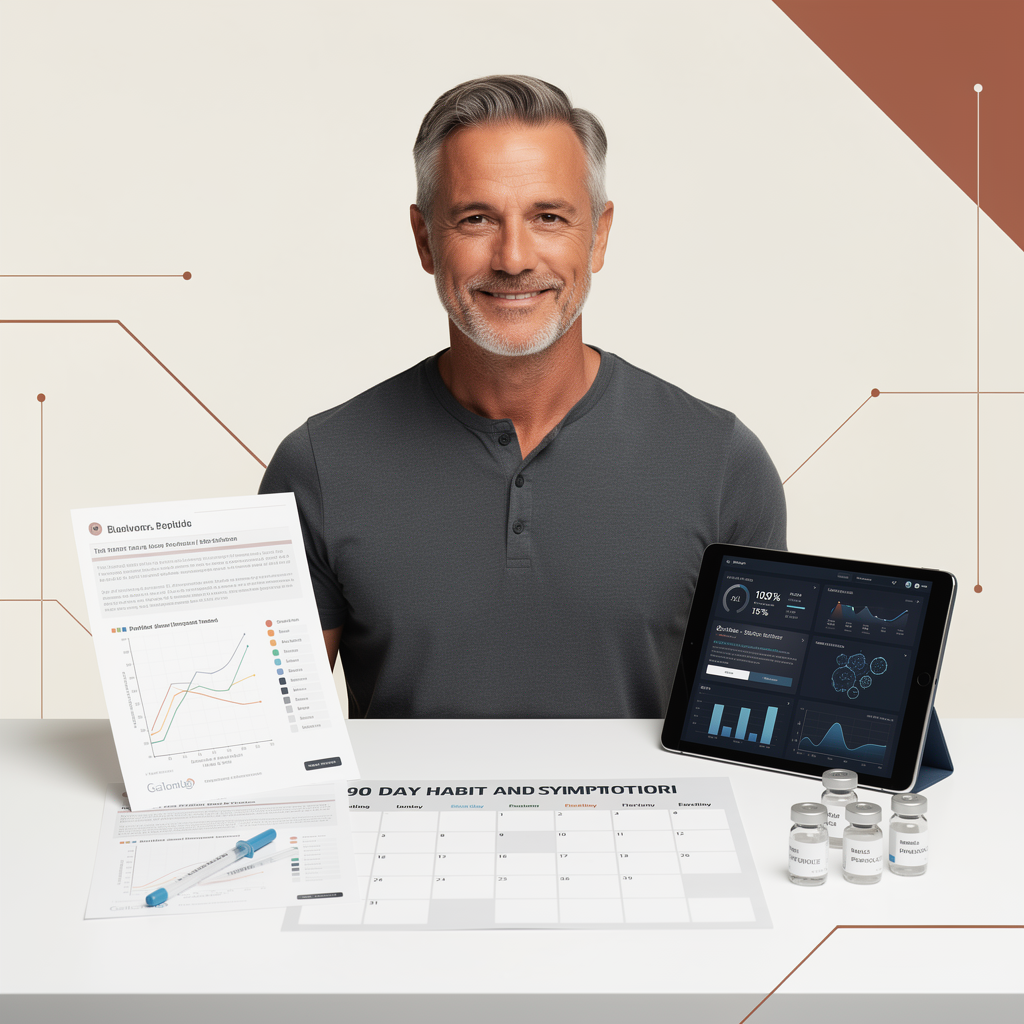
- Bloodwork before and during. Baseline IGF-1, fasting glucose, lipid panel, hsCRP. Re-measure at 90 days.
The honest take
The published human evidence base for most peptides — outside of the GLP-1 class — does not support the confidence level of typical marketing. The biological plausibility is genuine for several compounds. The question is whether you want to be among the people who try things before the RCTs catch up.
If you do: work with a licensed clinician, use a 503B compounding pharmacy, document baselines, track outcomes, stop if anything goes sideways.
Take the Hormone Age Calculator →Launch Campaign Assets (automation)
The Sunday letter
Free. Research-led. One thoughtful letter a week.
Recommended next step
Get personalized clarity or start a pathway
Take the 90-second Hormone Age quiz for your gap analysis, or walk a full decision pathway for HRT, metabolism, TRT, or cognition. Start the quiz · Explore pathways