
Bone density: the highest-stakes prevention conversation in your 50s.
If you read only one letter this year, read this one.
Osteoporotic hip fracture is the single most disabling preventable event of late life for women. Of women who fracture a hip after age 65: roughly 25% are dead within 12 months, 50% never return to prior level of independence, 40% require nursing-home placement (Bentler et al., 2009 — American Journal of Epidemiology).
The prevention happens in your 50s, not your 80s.
What's happening to your bones right now
Women lose bone density most rapidly in the 5 years immediately after their final period. The drop is approximately 10-20% of total bone mass during this window — almost all of it driven by estrogen withdrawal.
After year 5 post-menopause, the loss rate decelerates but continues at roughly 1% per year for the rest of life. By age 75, the average untreated woman has lost 30-50% of peak bone mass.
This translates to fracture risk in a non-linear way. Below a certain density threshold, the bone becomes structurally fragile. A fall that wouldn't have broken anything at 50 breaks a hip at 75. The fall isn't the cause; the bone density is.
The DEXA scan question
A DEXA (dual-energy X-ray absorptiometry) scan measures bone density at the hip and spine. It produces a T-score (your density vs. peak adult density) and a Z-score (vs. age-matched peers).
T-score interpretation:
- 0 to -1: normal
- -1 to -2.5: osteopenia (low bone density)
- Below -2.5: osteoporosis
The current US screening guideline (USPSTF) recommends DEXA starting at age 65 for all women, or earlier (~50) for women with risk factors.
This is too late. By 65, much of the post-menopausal bone loss has already happened. The window where intervention prevents fracture is the early-50s, not the mid-60s.
The honest recommendation: if you can, get a baseline DEXA in the year of or year after your final menstrual period. Repeat every 2-5 years depending on the result. The cost without insurance is $125-$300. Worth it.
What works to maintain or rebuild bone
Four interventions with the strongest evidence:
1. Resistance training (covered in letter #12). The single biggest non-pharmacological lever. The bone responds to mechanical loading by maintaining or building density. The Watson HiRIT trial, 2018 — JBMR — postmenopausal women doing 30 minutes 2x/week of supervised heavy lifting gained bone density. Most other exercise modalities maintain at best.
2. HRT — when initiated within the 10-year window. This is the largest single intervention available. Bone density is one of the most consistent and dramatic benefits of HRT in the 47-58 starting window. The fracture-reduction benefit is so robust that some specialists argue it should be a first-line indication independent of vasomotor symptoms. (See letter #1.)
3. Adequate calcium and vitamin D. 1,200 mg calcium/day (food + supplement), 2,000 IU vitamin D3 minimum. Both are necessary but not sufficient — calcium without vitamin D is poorly absorbed; both without mechanical loading don't build bone effectively.
4. Bisphosphonates (alendronate, zoledronic acid) — for established osteopenia or osteoporosis. These are the standard pharmacological treatment when bone density has already dropped below threshold. They reduce fracture risk by 30-50%. Side effects exist (GI irritation, rare atypical femur fractures, rare osteonecrosis of jaw). The risk-benefit is favorable when the diagnosis is clear.
For severe cases, newer drugs (denosumab, romosozumab, teriparatide) have stronger effects.
What does NOT prevent osteoporotic fracture
- Walking alone. Walking is excellent for many things; it does not significantly load the skeleton enough to prevent the post-menopausal drop.
- Calcium supplements alone without vitamin D and weight-bearing exercise.
- Yoga and Pilates alone. Good for many things; insufficient bone-loading.
- "Bone health" supplements with proprietary blends. Almost universally weak evidence.
- Strontium (popular in Europe, not FDA-approved in US). Mixed safety data. Skip.
The fall-prevention layer
Bone density is half the equation. The other half is fall prevention. By the time you're 65, the cumulative benefit of having spent 15 years doing balance work, strength training, and proprioceptive exercise is enormous.
Three highest-yield fall-prevention interventions:
- Single-leg balance work — 30 seconds on each leg daily. Easy. Free. Targets the proprioceptive decline that drives falls.
- Resistance training — already on the list for bone. Strong legs prevent the falls themselves.
- Vision check annually after 60 — uncorrected vision is one of the top fall causes.
Like this letter?
Subscribe to the Sunday letter. One thoughtful read per week, free.
What to do this week
If you're 45-55 and in or near menopausal transition:
- Get a baseline DEXA — ask your PCP, or pay cash at an imaging center. Know your number.
- Audit your protein and calcium. Hit the floors. (0.8g protein/lb, 1,200mg calcium/day with vitamin D.)
- Start resistance training if you haven't. The protocol in letter #12 works.
- Have the HRT conversation if you haven't yet. The bone benefit alone is reason to have it; the rest of the benefits stack on top.
- Check what your mom's bone density looked like at this age. Family history is the biggest non-modifiable risk factor.
This is the prevention conversation that matters most. The version of yourself at 75 will look back and either thank you for this decade or wish you'd paid more attention. The math is real.
Next week: heart health post-menopause — the cardiovascular pattern that doesn't get attention because it's not the male pattern.
Alexander After Forty Feel Reader-funded. Research-led. No supplement-brand sponsorships.
Get the Sunday letter free.
One long-form research-led piece every Sunday. Reply to anything — Alexander reads every response.
Subscribe →2026 Updates & Context
Key developments since earlier guidance: evolving data on GLP-1 + hormone interactions, refined risk stratification for HRT/TRT, new non-hormonal options, and better tools for body composition tracking. The fundamentals (individualization, resistance training, protein adequacy, sleep) remain the highest-leverage inputs.
Last framework refresh: 2026-06-01
Practical Tools (2026)
- Magnesium glycinate — high-ROI for sleep quality and recovery in midlife.
- Adjustable resistance equipment — for consistent training without gym dependency.
Affiliate disclosure: Links above are Amazon Associates examples. Purchases may earn a commission at no extra cost. We only recommend tools discussed in the research.
2026 Decision Framework
Core questions to answer before acting:
- What is my personal risk/benefit profile based on age, timing, labs, and symptoms?
- Which levers (hormones, training, nutrition, sleep, stress) should I pull first?
- What is my 3-month, 12-month, and 5-year plan for reassessment?
This is synthesis of current evidence — not personalized medical advice.
Launch Campaign Assets
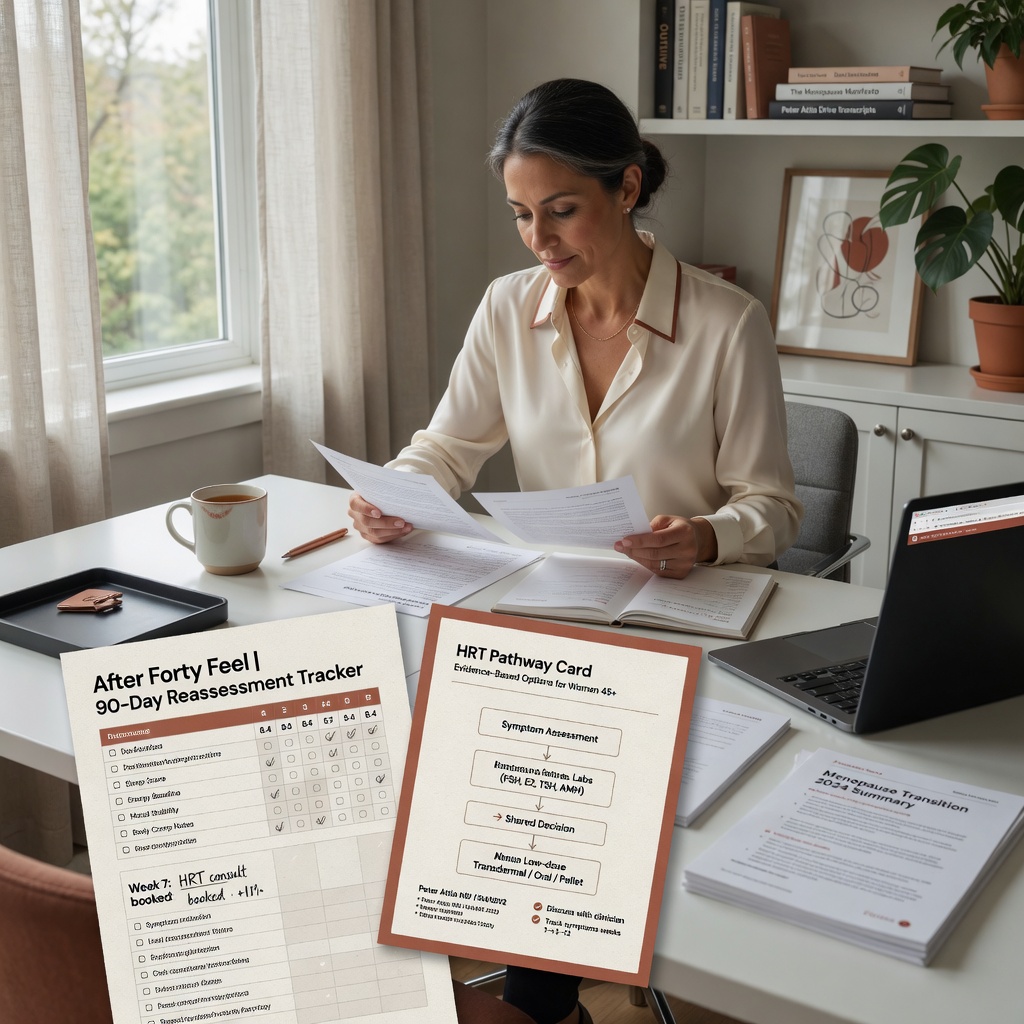
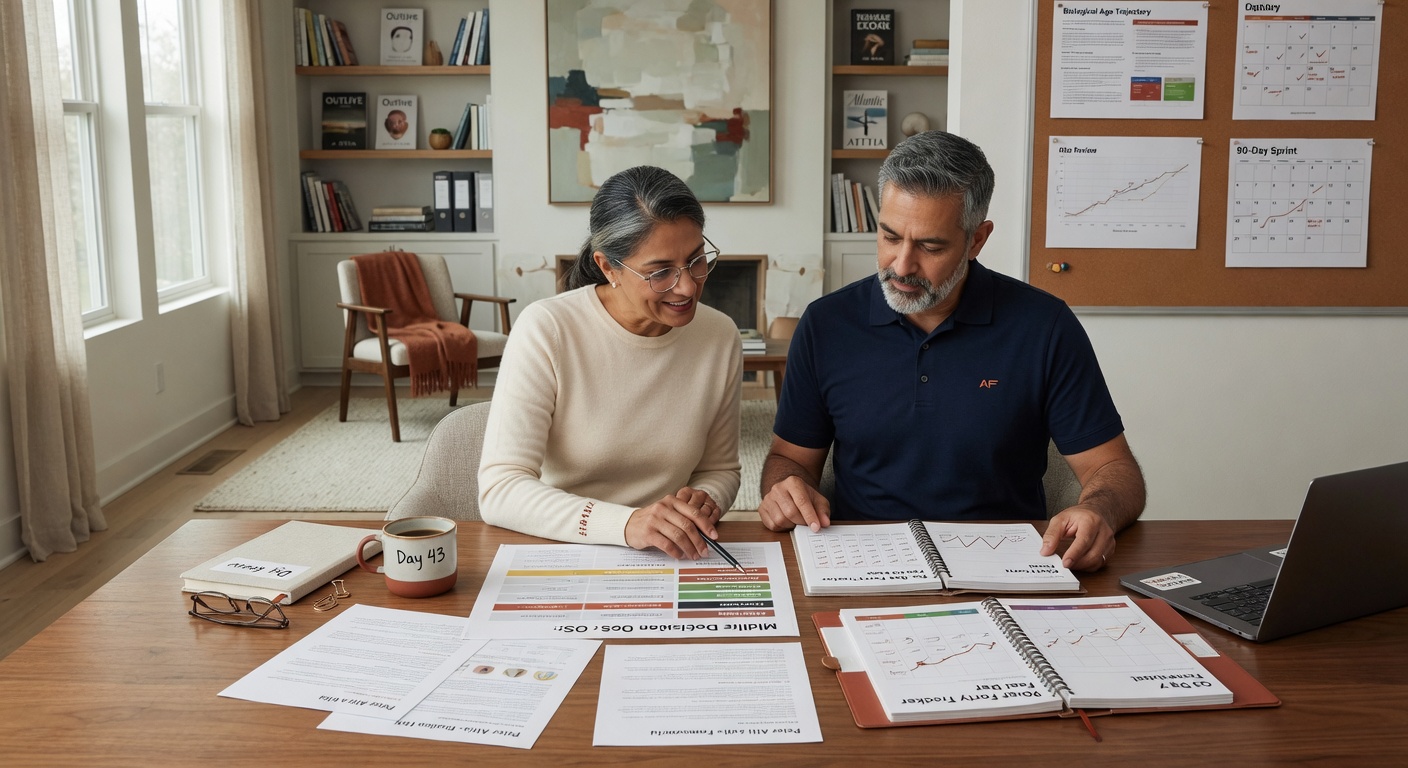
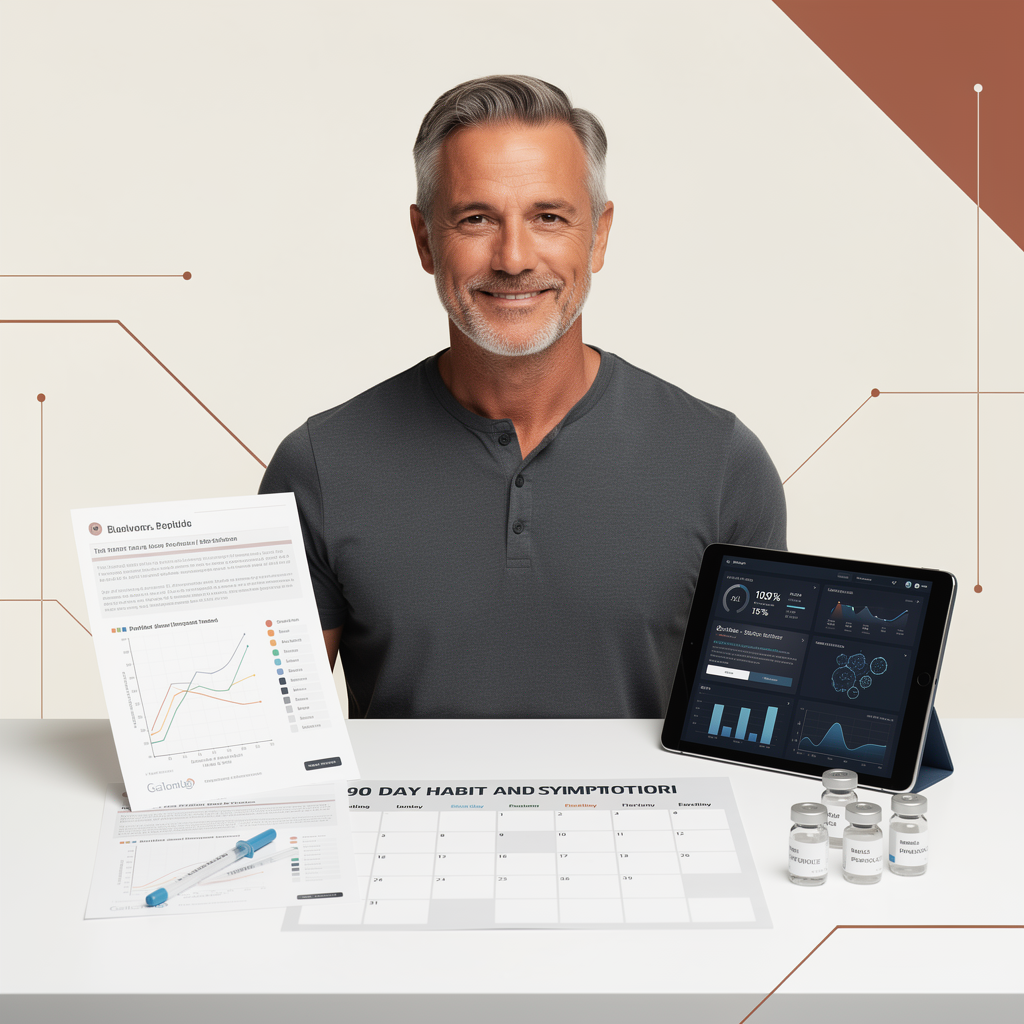
Professional brand visuals + latest higgs from automation engine. Rust #a8412a, evidence-first. +3 new S-tier assets (jpgs + png).
The Sunday letter
Free. Research-led. One thoughtful letter a week.
Recommended next step
Get personalized clarity or start a pathway
Take the 90-second Hormone Age quiz for your gap analysis, or walk a full decision pathway for HRT, metabolism, TRT, or cognition. Start the quiz · Explore pathways