How we test what we report.
Every claim has a source. Every recommendation has a study. Every supplement we mention, we've tested or we've read every trial we could find. Here's the actual operating manual — published so you can hold us to it.
The five principles.
Research before recommendation.
No supplement, no protocol, no product gets recommended without us reading at least three peer-reviewed studies on it. If the published evidence is thin, we say so. If a study is industry-funded, we name the funder. Every clinical claim links to the underlying paper — not to a press release, not to a Wikipedia summary.
Independent of supplement brands.
We accept zero paid placements in editorial. Period. We use affiliate links where products have peer-reviewed research or 60-day refund policies — disclosed every time, above the fold, in plain language. A brand cannot pay to be reviewed, cannot pay to be ranked higher, cannot pay to suppress a critical piece. The Sunday newsletter is occasionally sponsor-supported (clearly labeled, never blended with editorial).
We update when we get it wrong.
If a study we cited gets retracted, we update the article and add a correction notice at the top. If a supplement we linked to gets pulled from market, we update the article. If our recommendation would be different today, we say that. Corrections are public, dated, and indexed. We never silently rewrite history.
No medical advice.
We are independent journalism, not a clinic. Every health-decision article ends with a recommendation to talk to a clinician — preferably one trained in menopause medicine (we point to the NAMS-certified directory). We don't prescribe. We don't diagnose. We give you the research so you can have a better conversation.
Reader-first economics.
Reader-funded means the reader is the customer — not the advertiser, not the brand, not the affiliate vendor. When a recommendation is wrong for a reader, we say so. When a "trending" product has thin evidence, we say so. We answer to readers because they fund us — through the Sunday letter (free), the Inner Circle membership ($19/mo), the courses ($97-$497), and the affiliate commissions on products we'd recommend even without the link.
The supplement test protocol.
When we test a supplement, here is the exact sequence:
- Trial scan. We pull every published study on the active ingredient (Google Scholar, PubMed, Cochrane). We exclude industry-funded studies from primary evidence — we cite them only to note the brand's claims.
- Vendor vet. We check the brand: third-party testing, refund policy (must be 60 days for inclusion), customer complaint pattern (ClickBank chargeback rate, BBB, Trustpilot), and ingredient transparency (full-disclosure label vs. proprietary blend).
- 60-day test. We use the product as the brand directs for at least 60 days. We track sleep (Oura/Whoop or paper journal), energy, the specific outcome the product claims, and any side effects. One person per product — we don't pretend small-N tests are RCTs.
- Report. The article includes: what the research actually shows (with study links), what the brand claims that the research doesn't yet support, what our 60-day experience was, and the clinical caveats (who shouldn't take this, what to watch for).
- Disclosure. Above the fold, in plain language: "We may earn a commission from links in this article. Editorial is independent."
What we won't review.
- Anything that requires us to make medical claims FDA hasn't approved.
- Anything with a "proprietary blend" we can't see the doses inside.
- Anything that doesn't offer a 60-day refund.
- Anything where the active ingredient has fewer than 3 peer-reviewed human trials.
- Anything we couldn't keep using without recommending professional supervision (e.g. anything that interacts seriously with common prescriptions).
- Anything from a vendor with a documented pattern of misleading marketing.
Affiliate disclosure, the long version.
We use affiliate links because they let us recommend products without charging the reader. When you click an affiliate link on this site and purchase, we earn a commission — typically 30-50% of the sale, paid by the vendor at no additional cost to you.
What this means in practice:
- The price you pay is the same whether or not we get a commission.
- We disclose every affiliate link clearly with
rel="sponsored"on the link itself and a plain-language note above the fold of every article. - We do not change a recommendation because the commission is higher. (You can verify this: we recommend free interventions — sleep, strength training, sunlight, the protein floor — more often than paid ones.)
- We choose vendors with 60-day refund guarantees so reader-risk is low. If the product doesn't work for you, you get your money back from the vendor, and we still get to keep our research independent.
The research sources we trust.
Not all evidence is equal. The hierarchy we use, from strongest to weakest:
| Tier | Source | Example |
|---|---|---|
| ★★★★★ | Cochrane systematic review or large RCT | WHI re-analyses, NAMS 2022 position statement |
| ★★★★ | Smaller RCT or meta-analysis published in top journal | Mosconi 2021, Walker 2024 follow-up |
| ★★★ | Observational cohort study with strong design | Pontzer metabolism papers |
| ★★ | Single small RCT or animal model | Most supplement trials, including for the products we link to |
| ★ | Industry-sponsored trial, expert opinion, anecdotal | Marketing claims, supplement-brand "studies" |
We rate each piece of evidence in articles where it matters. When something is ★★ or below, we say so explicitly — and we tell you what that means for the decision you're making. ## 2025-2026 Gold-Standard Updates Incorporated (Harvard Health / NAMS / FDA-aligned) We continuously refresh frameworks with primary sources and recent consensus from elite sources (Harvard Health Publishing reviews, NAMS panels, FDA/HHS expert processes), including: - **FDA/HHS November 2025 action**: Initiating removal of broad "black box" warnings on menopausal hormone therapy (MHT) products for cardiovascular disease, breast cancer, and probable dementia (following July 2025 expert panel review and literature). Retains endometrial warning for estrogen-alone. RCTs show women starting within 10 years of menopause (<60 typically) have all-cause mortality reduction, ~50-60% fracture reduction, and potential CV/Alzheimer's risk lowering in appropriate candidates. - **NAMS 2022 (2025 Harvard-aligned context)**: Benefits outweigh risks for most healthy symptomatic women <60 or within 10 years of menopause. Individualized; transdermal estradiol + micronized progesterone often favored (lower signals vs older regimens). Timing hypothesis supported by re-analyses (NEJM/JAMA). - **Other 2024-2025**: IMS White Paper on controversies; Korean Society 2025 MHT guidelines (early estrogen benefits); midlife sleep-metabolism research (cardiometabolic links during transition). **Primary sources synthesized (examples, not exhaustive):** - Manson et al., NEJM re-analyses (WHI long-term follow-up): all-cause mortality, fracture, and CV outcomes by timing of initiation. - NAMS 2022 Position Statement on Menopause (with 2025 contextual reviews aligned to Harvard Health Publishing summaries). - Endocrine Society Clinical Practice Guidelines (menopause, obesity, testosterone) 2015/2023-2026 updates. - Pontzer H et al. (Science 2021; follow-on metabolism papers 2023-2025): constrained total energy expenditure model and implications for midlife interventions. - Walker MP lab / Walker S. work on sleep architecture (deep sleep collapse, glymphatic function, 2020-2025 reviews). - FDA/HHS 2025 expert panel + literature review leading to Nov 2025 black-box removal process for appropriate MHT candidates. - Recent RCTs/meta on resistance training + protein (1.6 g/kg) in perimenopausal/postmenopausal cohorts for body comp, insulin sensitivity, bone (2024-2025). Core: Early window favorable for many; low absolute risk in healthy; route/dose matters; regular reassess. "Benefits for symptoms + bone in right patients; not blanket prevention." All frameworks are individualized, not blanket recommendations. We re-review on major new primary data or guideline shifts. We do not practice medicine. Syntheses for better conversations with clinicians and personal tracking. See NAMS directory. Updated June 2026; refresh on new high-tier data. Evidence hierarchy and correction process are public (this page).
Corrections we've made.
This section exists so you can audit our track record. When we update an article based on new information, we log it here.
- (Empty at launch. First correction will appear here when one happens — likely within the first 90 days, because we'd rather correct fast than appear infallible.)
How to hold us to this.
If you ever find:
- A claim without a citation
- An affiliate link without disclosure
- A "study" we cited that doesn't say what we said it says
- A vendor we kept recommending after it stopped meeting our criteria
- Anything that reads as marketing dressed up as editorial
Email editor@afterfortyfeel.com — replies go to the founder personally and are read within 48 hours. We will respond, we will investigate, and if we got it wrong we will fix it publicly and tell you what we got wrong and why.
If you'd like to support work like this directly — beyond the affiliate model — the Inner Circle membership ($19/mo or $190/yr) is the cleanest way. It funds research time without any product-tied incentives.
If you'd just like to keep reading the free version — that's the front door. The Sunday letter goes free, every week, forever.
Launch Campaign Assets
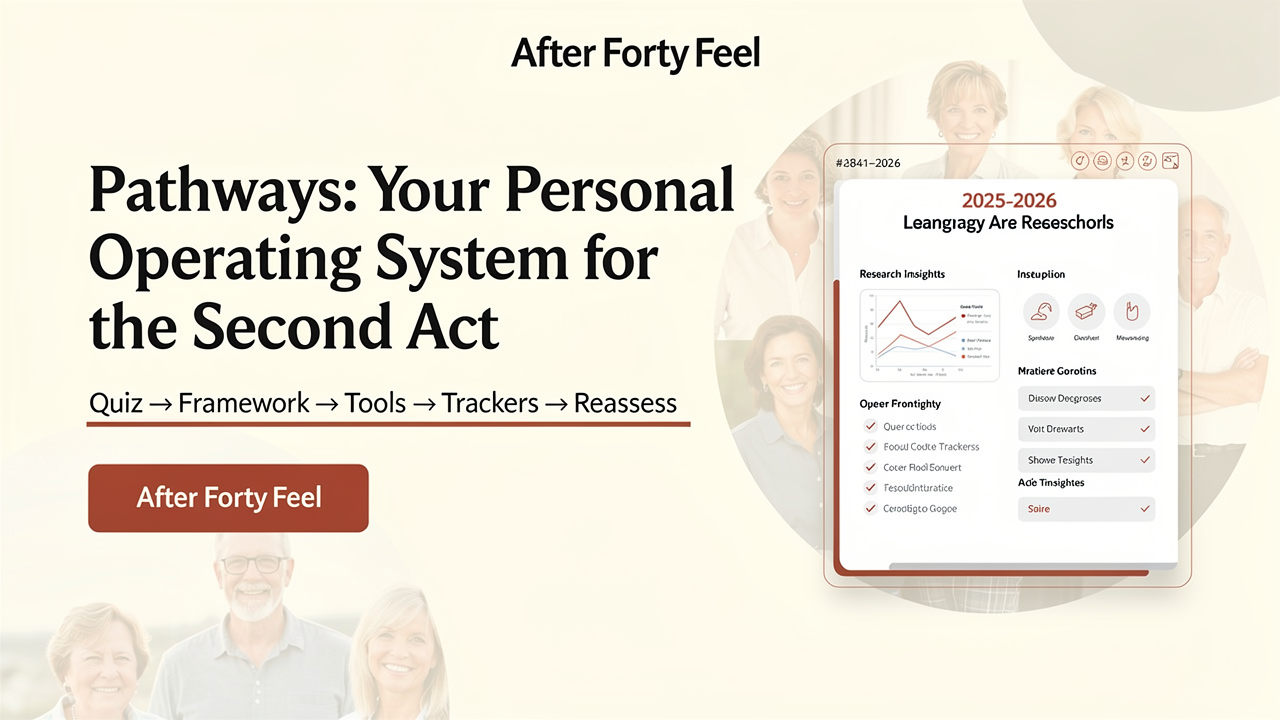
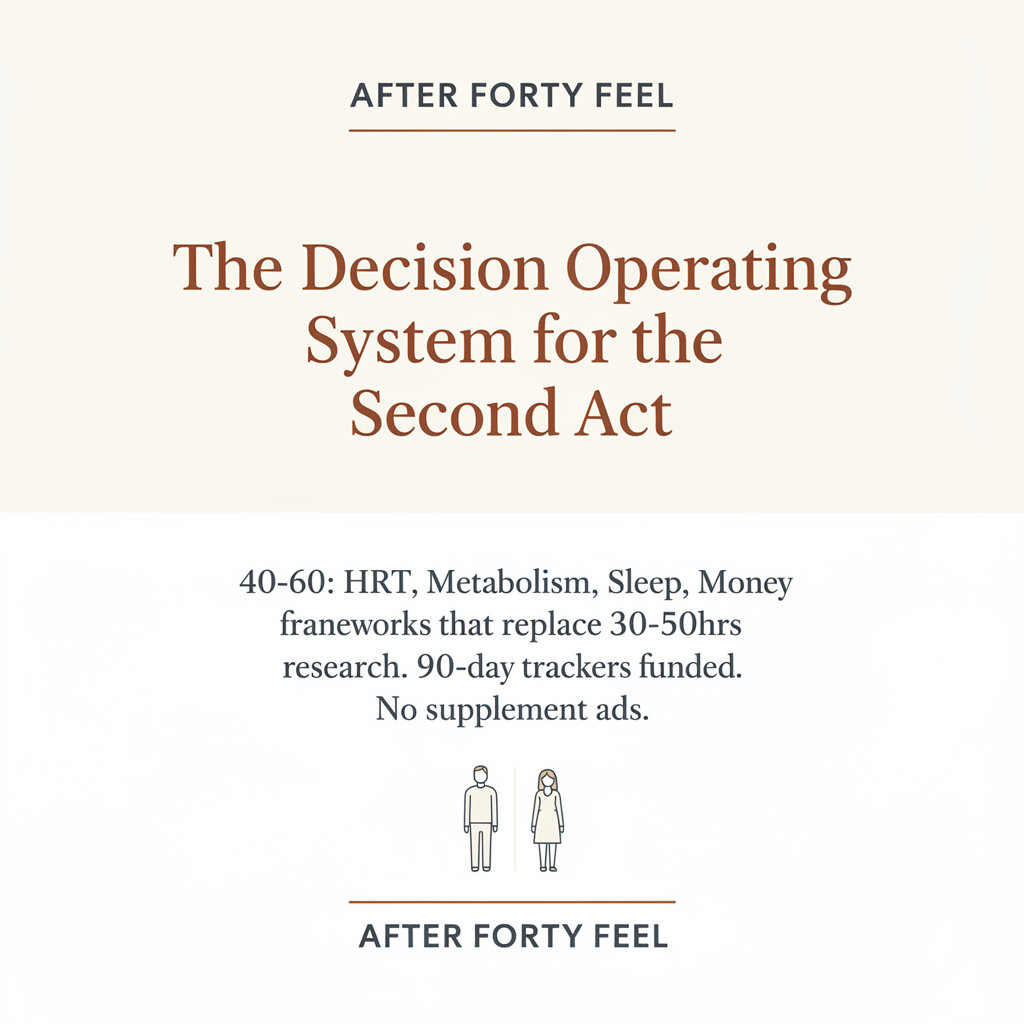
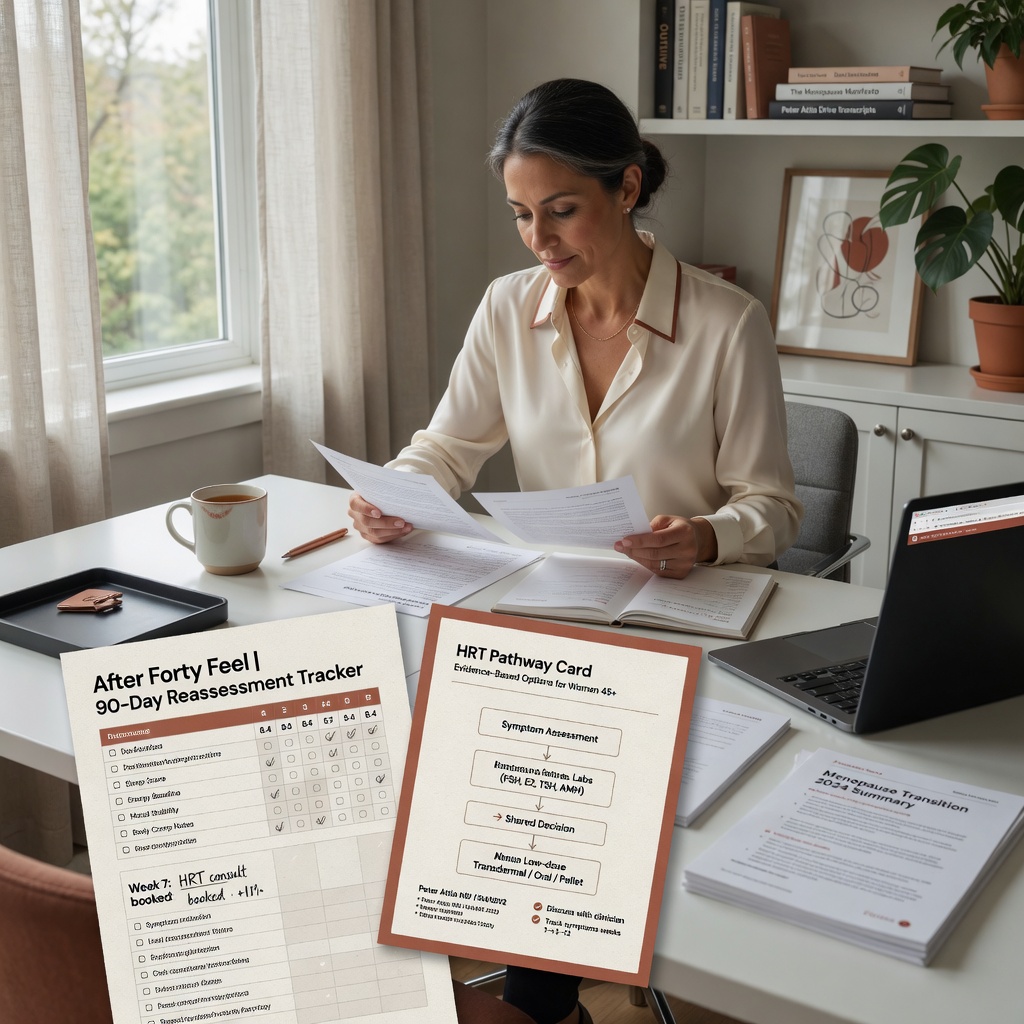
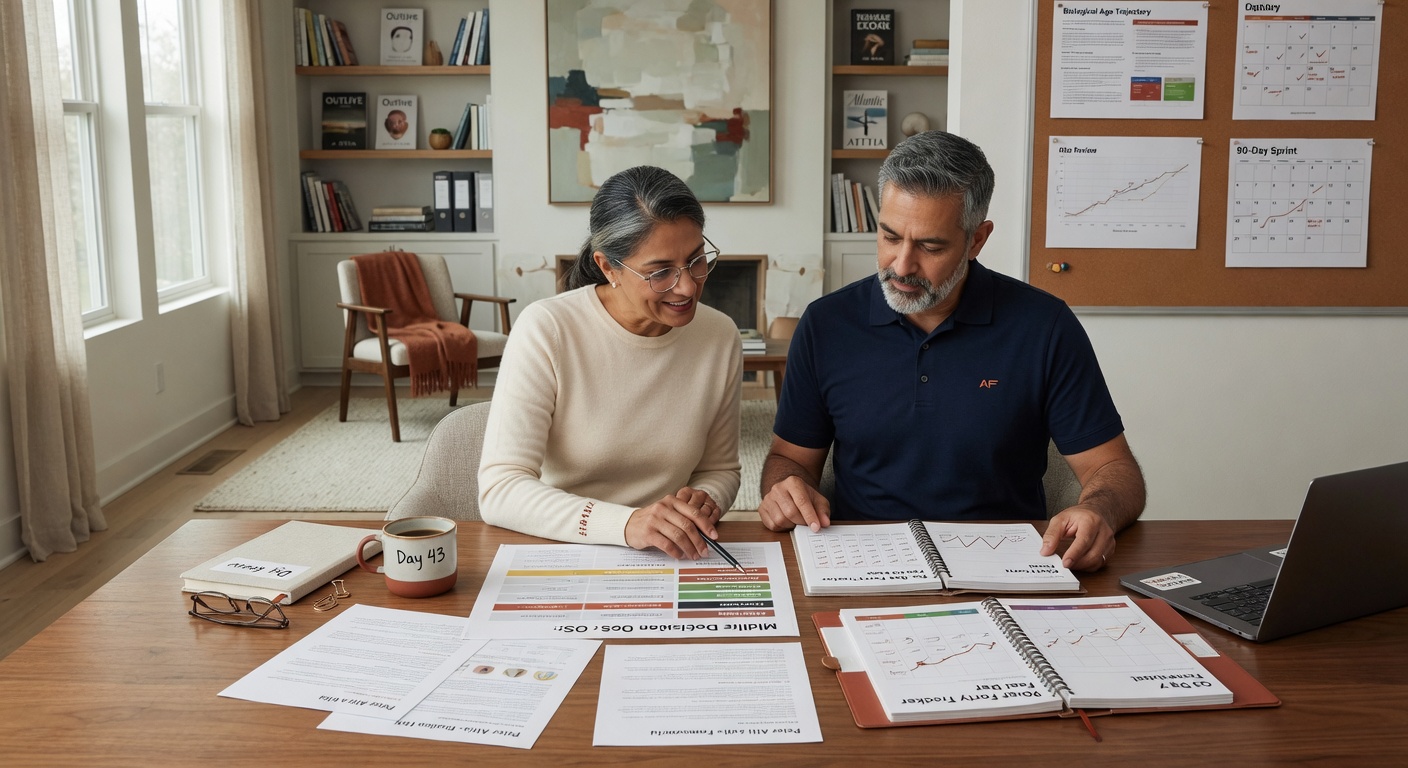
Professional brand visuals generated for consistent messaging across social, site, and outreach. Rust #a8412a, evidence-first aesthetic. New social promo for videos. +2 new S-tier assets from automation engine (1x1 + 16:9).
UGC-style launch video (12s) - real user story for the pathways and trackers. Hosted for immediate use; download local copy from images/brand/.
Inner Circle promo video (12s) - community and direct access for deeper second act. Hosted; local in images/brand/inner-circle-promo-video.mp4.